
10 Stretches for Tight Hips That Improve Flexibility and Reduce Tension
If your hips feel stiff after sitting for long periods, you’re not alone. Tight hips are common among office workers, students, drivers, and even active people who spend a lot of time sitting between workouts.
When the muscles around the hips become tight, simple activities like walking, bending down, exercising, or even standing for long periods can feel uncomfortable.
The good news is that a few minutes of stretching can help improve mobility, reduce tension, and make everyday movement feel easier. In this guide, you’ll learn 10 effective stretches for tight hips, how to perform them correctly, and the benefits each one provides.
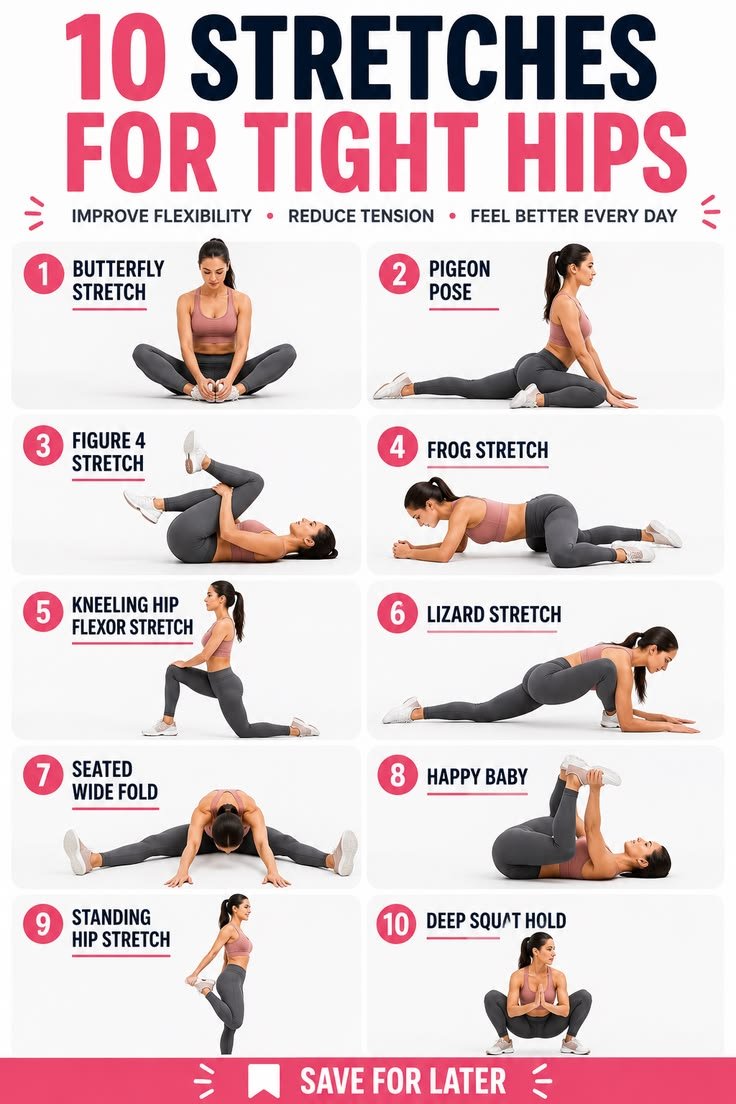
Butterfly Stretch
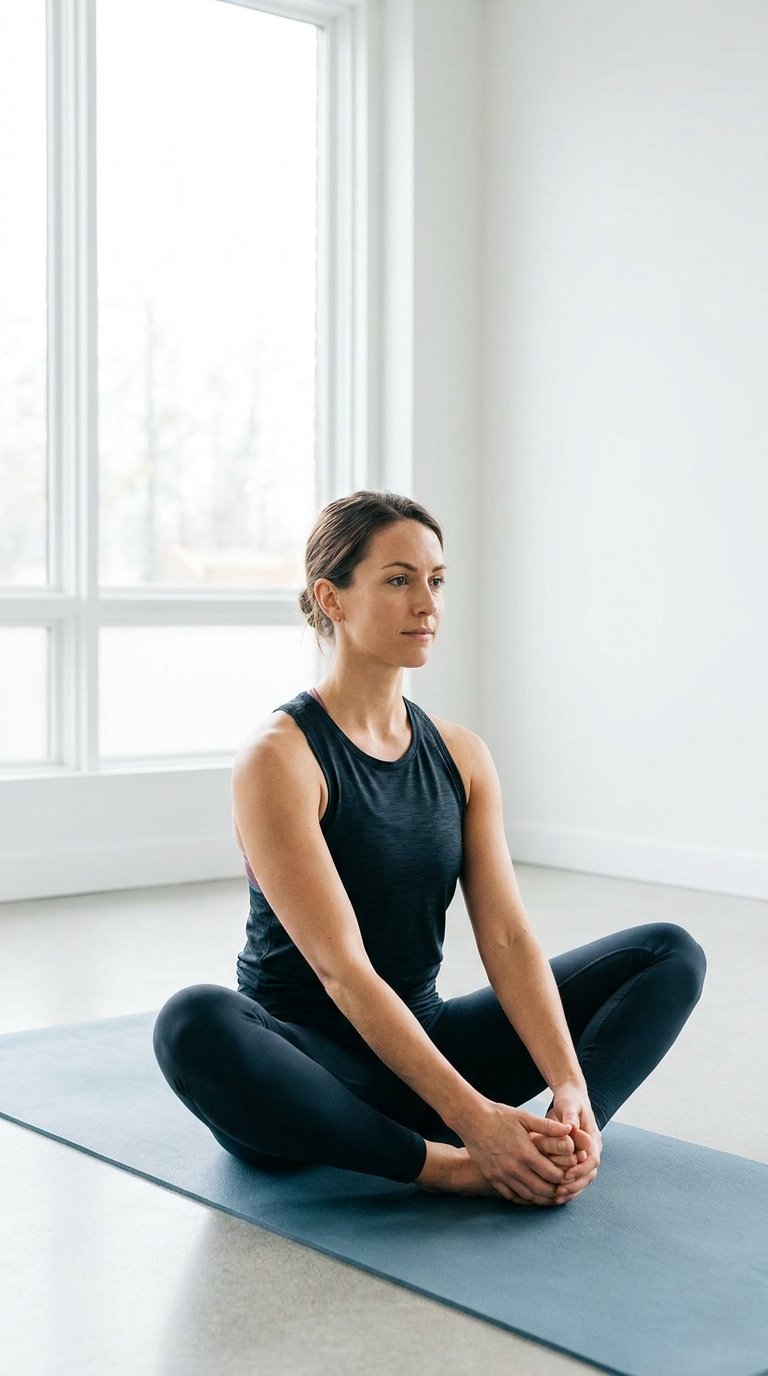
What Is the Butterfly Stretch?
The butterfly stretch targets the inner thighs and hip adductors while encouraging the hips to open naturally.
How to Do It
- Sit on the floor with your back straight.
- Bring the soles of your feet together.
- Allow your knees to fall outward naturally.
- Hold your feet with both hands.
- Gently lean forward until you feel a stretch.
- Hold for 20–30 seconds while breathing slowly.
Benefits
- Improves hip flexibility
- Stretches the inner thighs
- Helps reduce hip tension
- Supports better posture
Common Mistakes
- Rounding the lower back
- Forcing knees toward the floor
- Bouncing aggressively
Hold Time
20–30 seconds.
Pigeon Pose
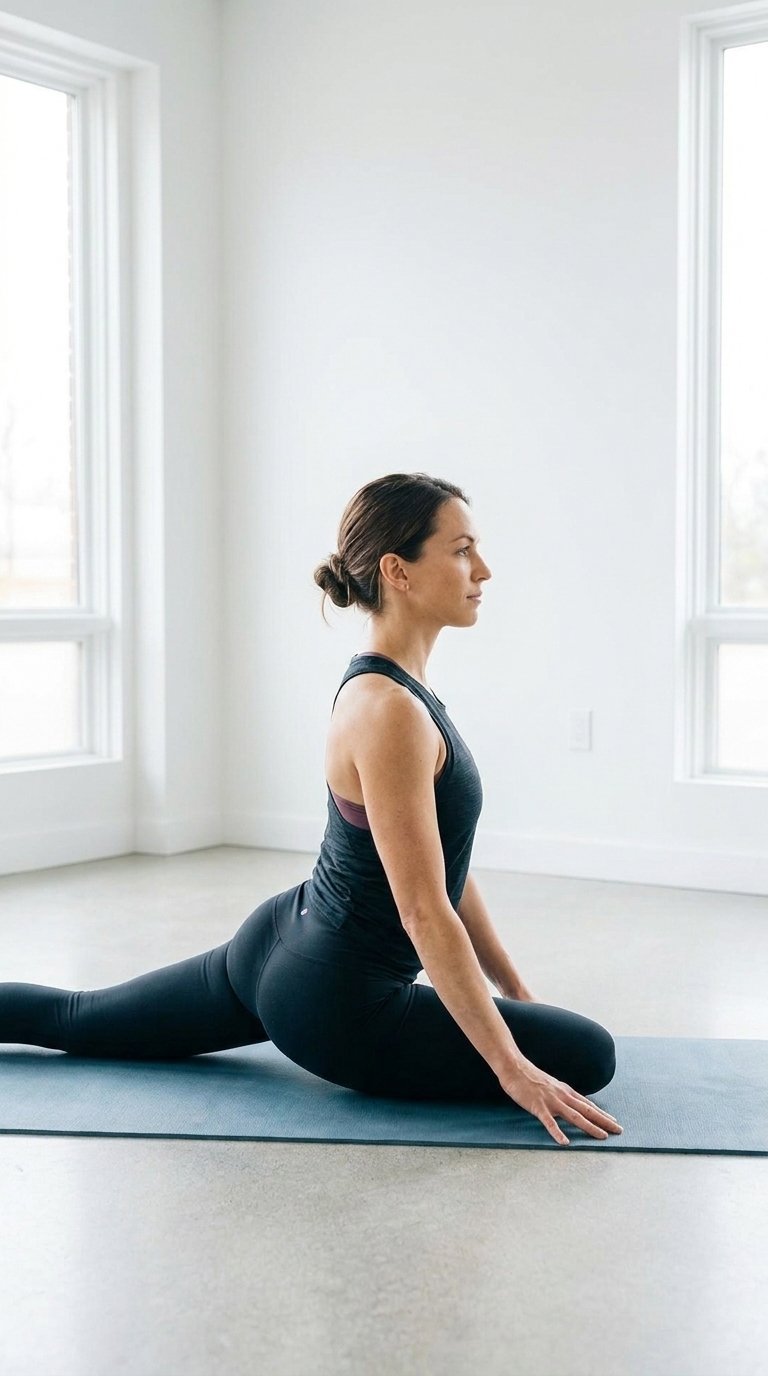
What Is Pigeon Pose?
Pigeon pose is one of the most effective stretches for the glutes and deep hip muscles.
How to Do It
- Start in a tabletop position.
- Bring your right knee forward behind your right wrist.
- Extend your left leg straight behind you.
- Keep your hips square.
- Stay upright or fold forward gently.
- Hold for 20–30 seconds and switch sides.
Benefits
- Targets deep hip muscles
- Improves mobility
- Reduces lower back tension
- Enhances flexibility
Common Mistakes
- Twisting the hips
- Collapsing into one side
- Forcing the stretch
Hold Time
20–45 seconds per side.
Figure 4 Stretch
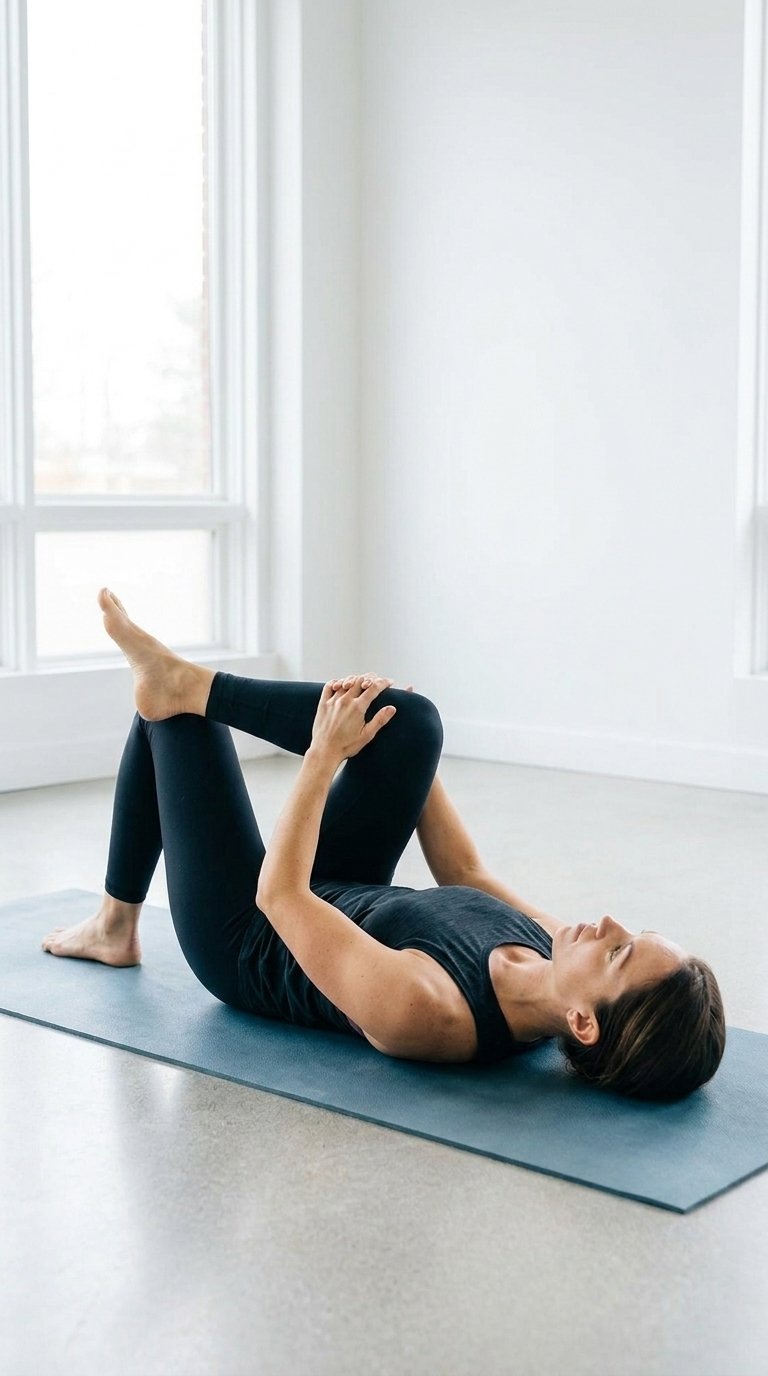
What Is the Figure 4 Stretch?
This stretch targets the glutes, piriformis, and outer hips.
How to Do It
- Lie on your back..
- Cross one ankle over the opposite knee.
- Reach behind the supporting leg.
- Pull the leg toward your chest.
- Hold while breathing slowly.
Benefits
- Relieves hip tightness
- Targets deep glute muscles
- Can help reduce lower-back tension
- Improves hip mobility
Common Mistakes
- Pulling too aggressively
- Lifting the head and neck
- Holding your breath
Hold Time
20–30 seconds per side.
Frog Stretch
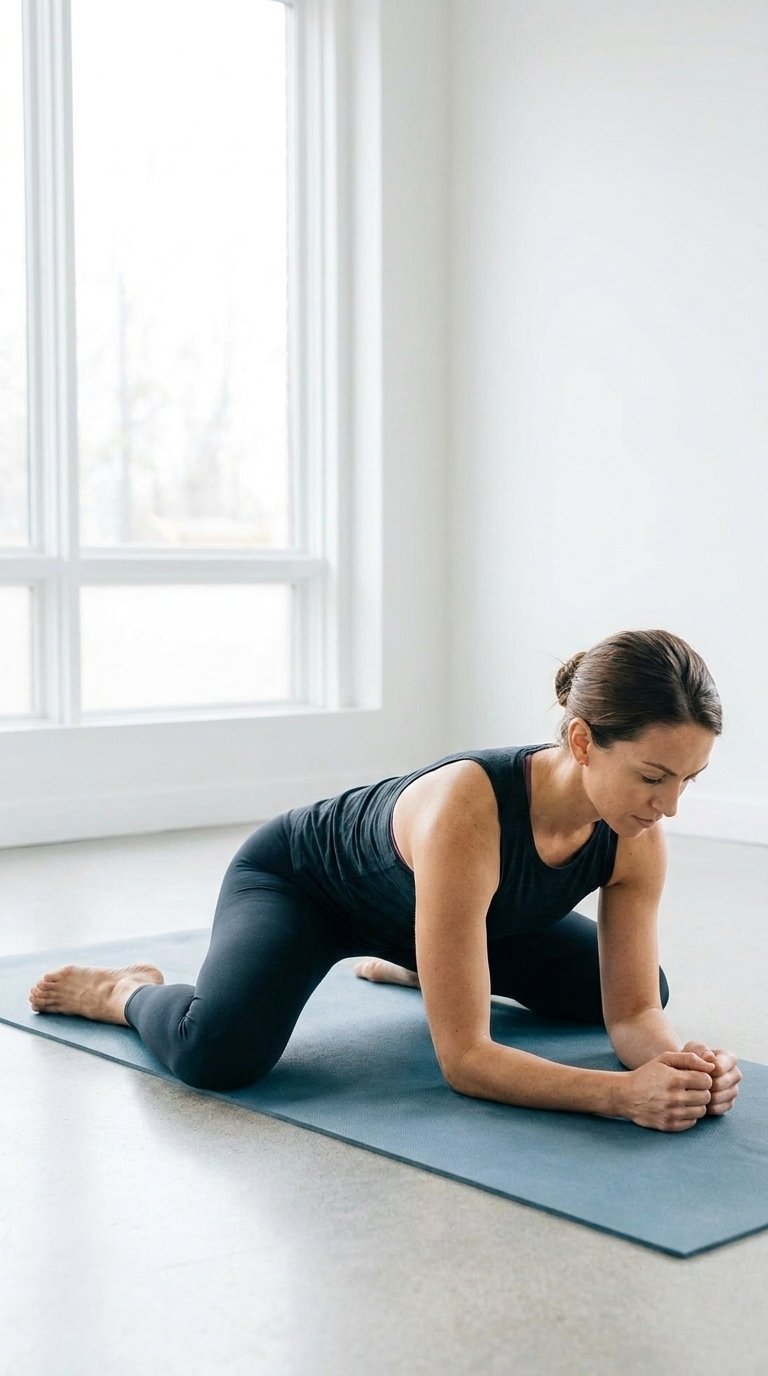
What Is the Frog Stretch?
The frog stretch focuses on the inner thighs and groin area.
How to Do It
- Begin on hands and knees.
- Move your knees wider apart.
- Lower onto your forearms.
- Keep your feet in line with your knees.
- Slowly shift backward.
Benefits
- Improves hip mobility
- Stretches the groin
- Helps increase flexibility
- Useful for deep squat mobility
Common Mistakes
- Moving too quickly
- Allowing lower back discomfort
- Spreading knees beyond comfort
Hold Time
20–40 seconds.
Kneeling Hip Flexor Stretch
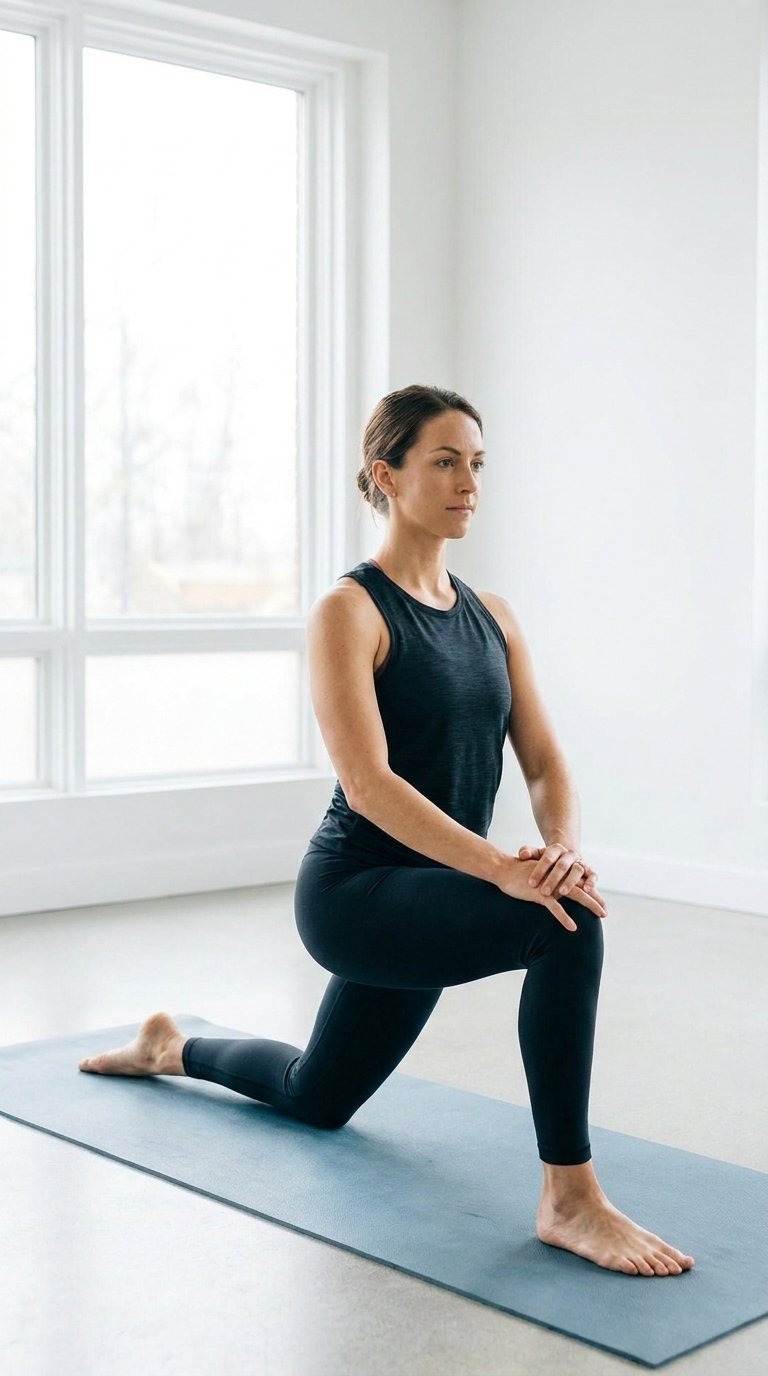
What Is the Kneeling Hip Flexor Stretch?
This stretch targets the hip flexors, which often become tight from prolonged sitting.
How to Do It
- Kneel on one knee..
- Place the other foot in front..
- Keep your torso upright.
- Gently push your hips forward.
- Feel the stretch in the front of the hip..
Benefits
- Reduces hip flexor tightness
- Improves posture
- Supports lower-back comfort
- Enhances walking mechanics
Common Mistakes
- Leaning forward excessively
- Arching the lower back
- Pushing too aggressively
Hold Time
20–30 seconds per side.
Lizard Stretch
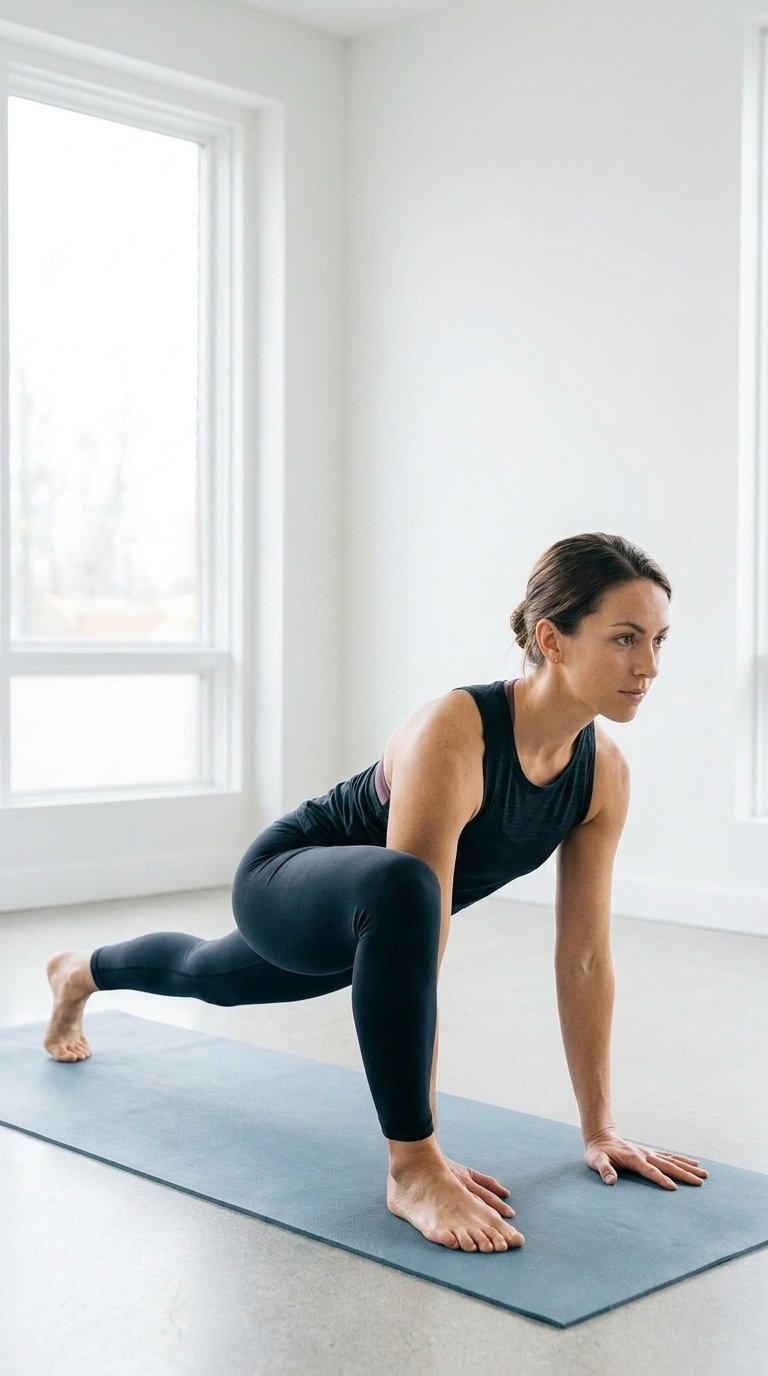
What Is the Lizard Stretch?
The lizard stretch combines hip flexor, groin, and hamstring mobility in one movement.
How to Do It
- Start in a plank.
- Step one foot outside your hand.
- Lower to your forearms if comfortable.
- Keep your back leg extended.
- Hold the position.
Benefits
- Improves overall hip mobility
- Opens the groin
- Stretches hip flexors
- Increases flexibility for movement
Common Mistakes
- Rounding the back
- Allowing the front knee to collapse inward
- Forcing depth
Hold Time
20–45 seconds.
Seated Wide Fold
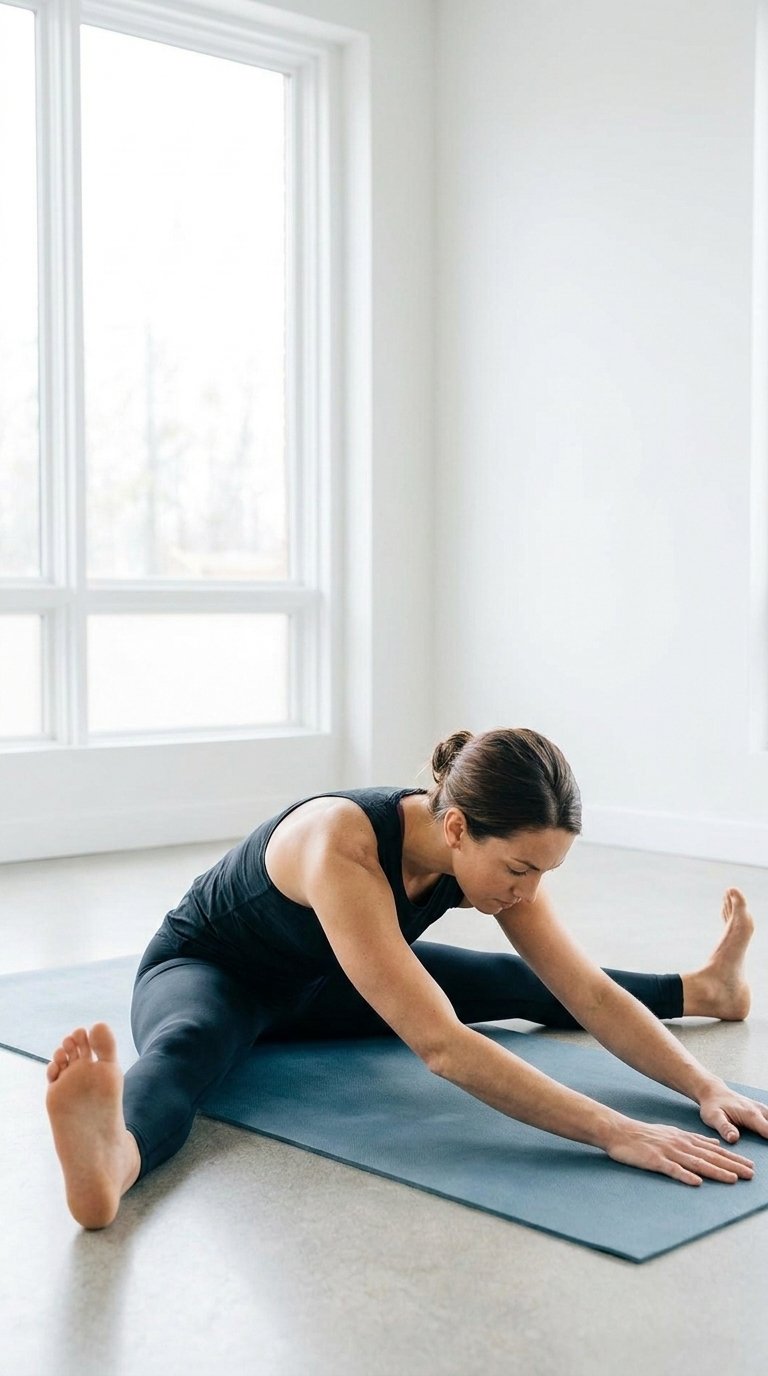
What Is the Seated Wide Fold?
This stretch targets the inner thighs, hamstrings, and hips.
How to Do It
- Sit with your legs spread comfortably.
- Sit tall.
- Slowly fold forward.
- Reach your hands ahead.
- Keep your spine long.
Benefits
- Improves flexibility
- Opens the hips
- Lengthens hamstrings
- Reduces stiffness
Common Mistakes
- Rounding the back
- Forcing a deep fold
- Locking the knees
Hold Time
20–30 seconds.
Happy Baby Pose
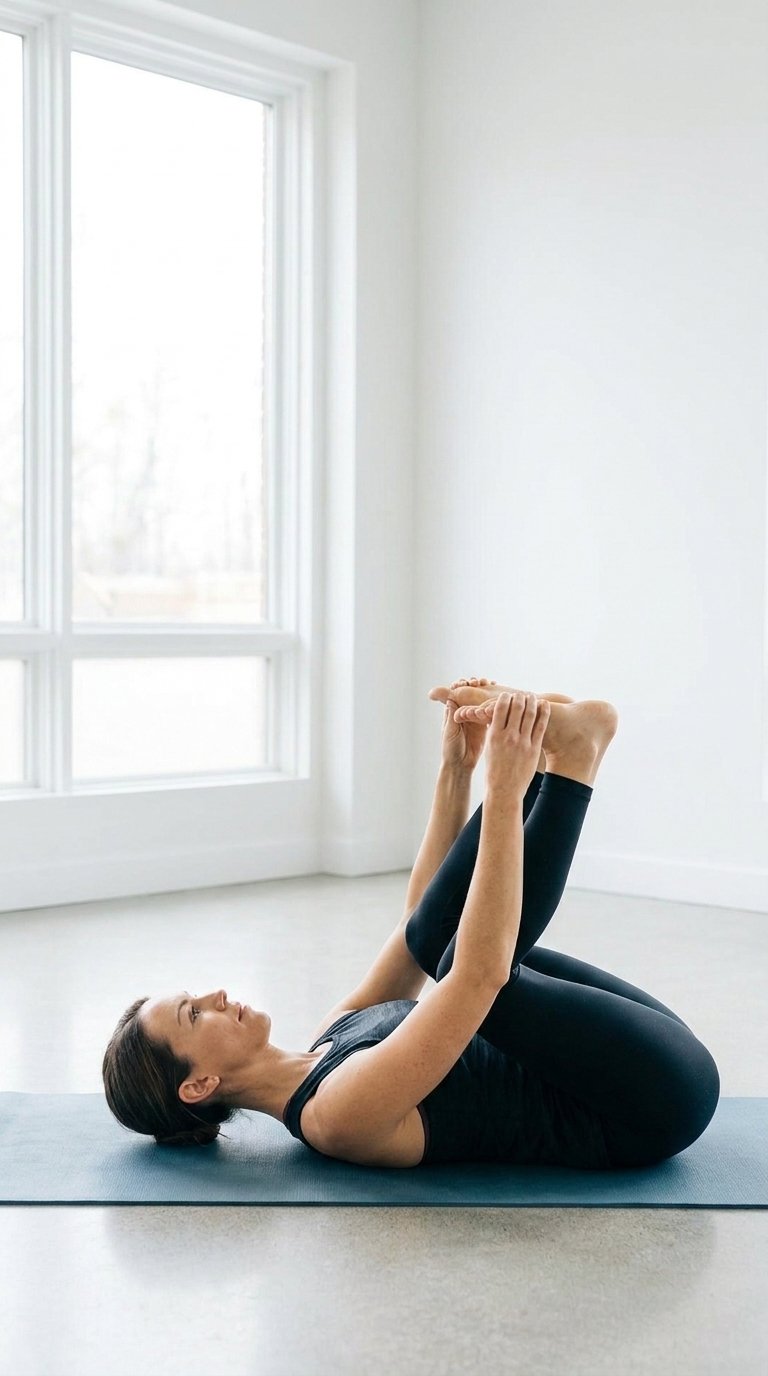
What Is Happy Baby Pose?
Happy Baby gently stretches the hips while helping release tension in the lower back.
How to Do It
- Lie on your back.
- Bring knees toward your chest.
- Grab the outside of your feet.
- Keep knees wider than the torso.
- Gently pull downward.
Benefits
- Relaxes the hips>
- Relieves lower-back tension
- Encourages mobility
- Helps reduce stress
Common Mistakes
- Pulling too hard
- Lifting shoulders excessively
- Straining the neck
Hold Time
20–30 seconds.
Standing Hip Stretch
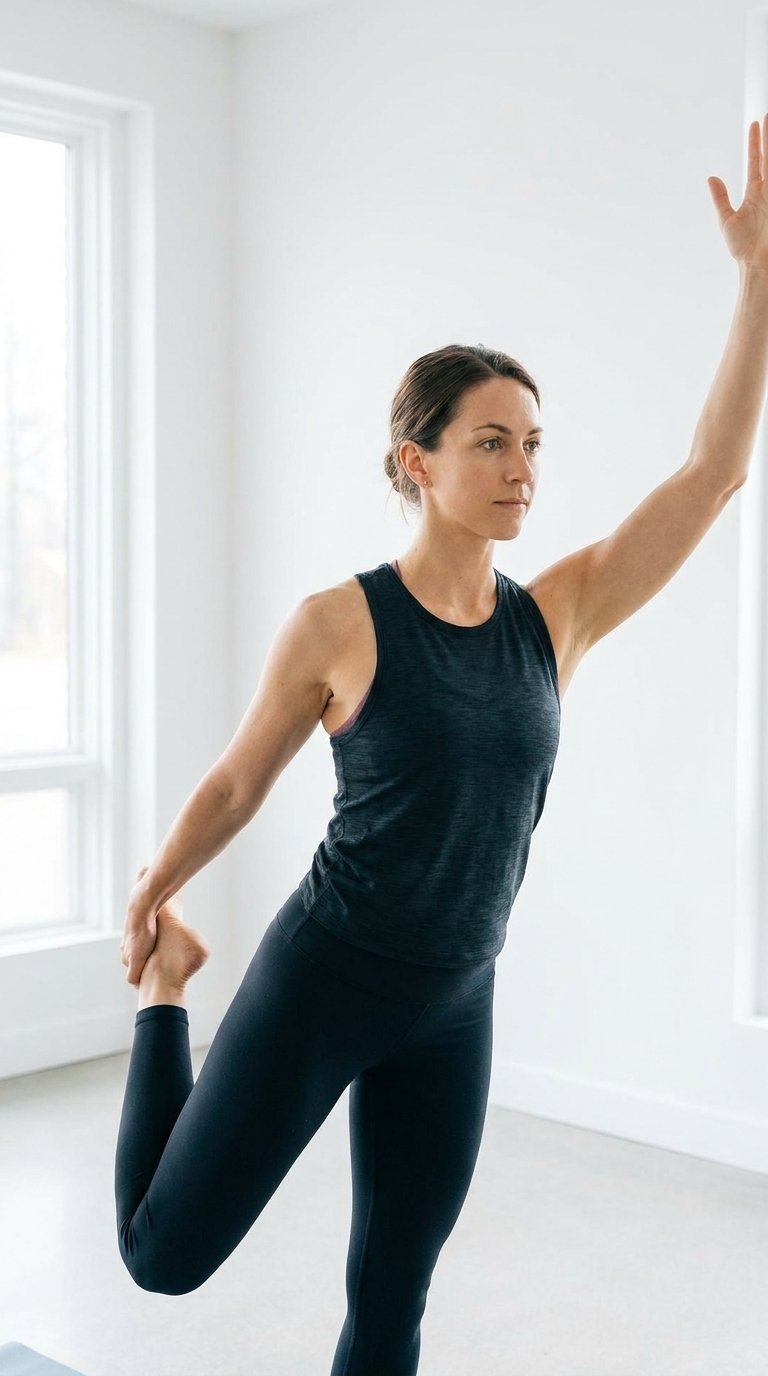
What Is the Standing Hip Stretch?
This balance-based stretch targets the front of the hip and quadriceps.
How to Do It
- Stand tall.
- Hold a wall if needed.
- Grab one ankle behind you.
- Pull gently toward your glutes.
- Keep knees close together.
Benefits
- Stretches hip flexors
- Improves balance
- Reduces front-hip tightness
- Supports mobility
Common Mistakes
- Leaning forward
- Pulling excessively
- Letting the knee flare outward
Hold Time
20–30 seconds.
Deep Squat Hold
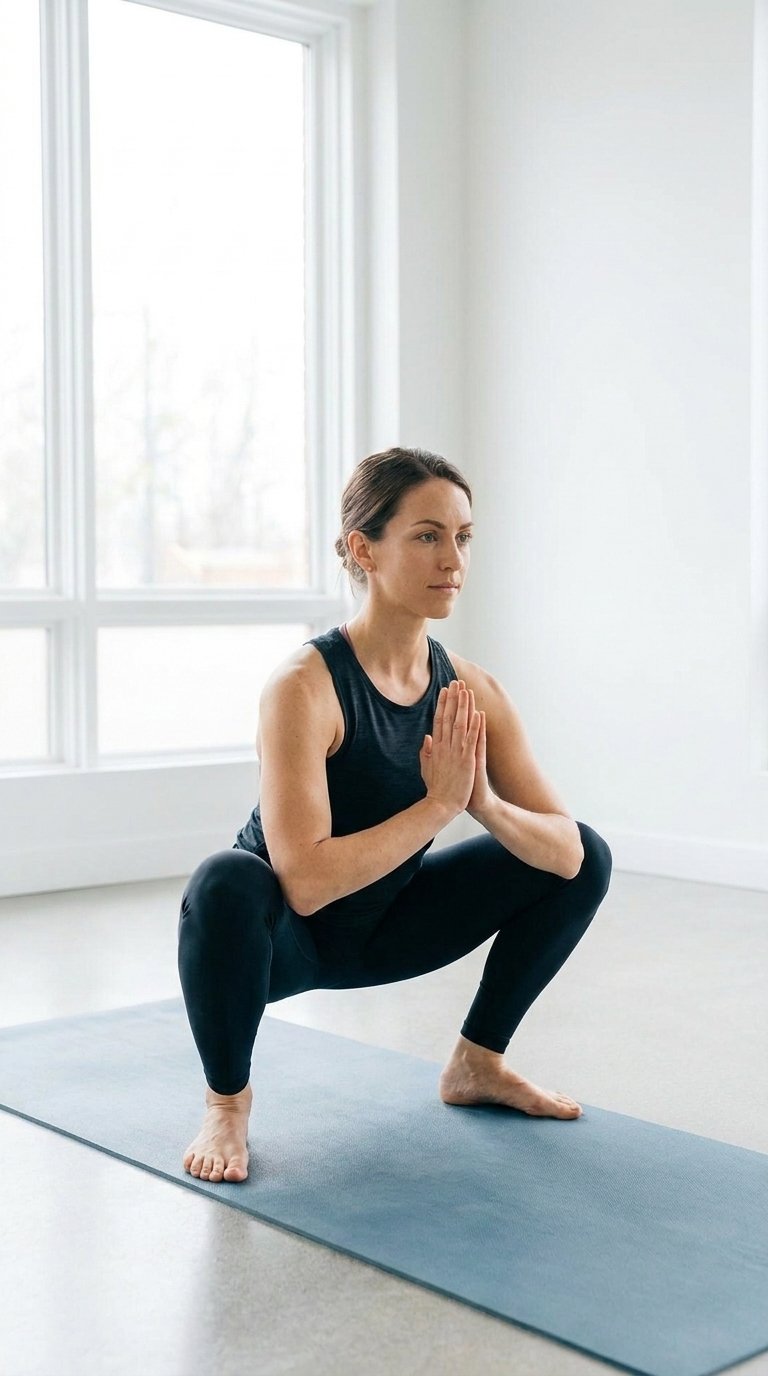
What Is the Deep Squat Hold?
The deep squat hold helps improve ankle, knee, and hip mobility simultaneously.
How to Do It
- Stand with feet slightly wider than hip-width.
- Lower into a deep squat.
- Keep your chest lifted.
- Press elbows against your knees.
- Hold comfortably..
Benefits
- Improves overall lower-body mobility
- Opens the hips
- Encourages better squat mechanics
- Supports everyday movement
Common Mistakes
- Rounding the back
- Lifting the heels
- Holding tension in the shoulders
Hold Time
20–45 seconds.
Final Thoughts
Tight hips can make everyday movement feel uncomfortable, but regular stretching can gradually improve flexibility and reduce tension. You don’t need to perform all ten stretches every day. Even choosing three to five and practicing them consistently can help your hips feel looser and more mobile over time.
Listen to your body, move slowly, and focus on steady breathing. With consistency, you’ll likely notice better mobility, improved comfort, and greater ease in daily activities.
How often should I stretch tight hips?
Most people benefit from stretching their hips 3–5 times per week. Daily stretching may produce faster improvements in flexibility.
Can tight hips cause lower back pain?
Yes. Tight hip muscles can alter posture and movement patterns, which may contribute to lower back discomfort.
How long should I hold each stretch?
Aim for 20–30 seconds per stretch. As flexibility improves, you can gradually increase the duration.
Are these stretches beginner-friendly?
Yes. All of the stretches listed above can be modified for beginners and performed without special equipment.
Fit Today
Fit Today shares healthy recipes, fitness tips, walking routines, stretching exercises, and wellness inspiration for everyday living.
Quick Links
Popular Topics
- Healthy Breakfast Recipes
- High Protein Recipes
- Walking for Weight Loss
- Yoga and Stretching
© 2026 Fit Today. All Rights Reserved.